FAI Automotive’s latest technical bulletin is offering garages and workshops insight into the degradation of timing chains, to offer help and support in understanding this issue, the causes, how to diagnose the symptoms – and also fix it right, first time.
Modern diesel engines deliver impressive performance and efficiency, but increasing system complexity means that reliability is now influenced by a much wider set of factors than mechanical wear alone.
Think of the timing chain as being similar to a fuse in an electrical circuit – if another component within the engine is not functioning correctly, the chain takes the strain and is often the first part to fail. Meaning that timing chain breakage is frequently the result of underlying engine issues rather than the root cause itself.
A clear example of this is the AJ20D4 2.0-litre Ingenium diesel engine, where timing chain durability is closely linked to lubricant condition and emissions system behaviour.
Used across a wide range of Jaguar and Land Rover models between 2015 and 2020, the AJ20D4 is a highly engineered powertrain featuring a rear-mounted timing chain, EGR and DPF systems. While effective in meeting emissions requirements, these integrated systems can contribute to accelerated wear if operating conditions and maintenance regimes are not optimised.
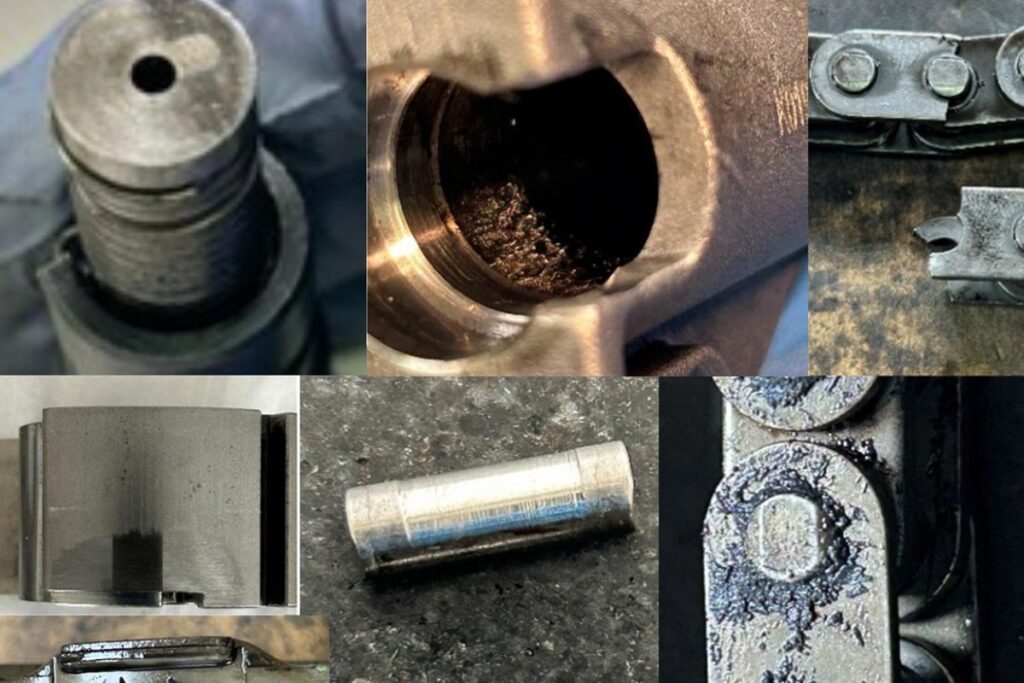
Premature timing chain elongation in the AJ20D4 engine is primarily driven by mechanical wear of the chain pins and links, often accelerated by insufficient lubrication quality. When lubricant integrity is compromised, high cyclic loads place excessive stress on the chain and tensioner system.
Hydraulic tensioners are particularly vulnerable. Contaminated oil and reduced oil pressure impair their ability to maintain correct chain tension, allowing slack to develop. Over time, inconsistent tension leads to increased contact with polymer chain guides, causing misalignment and rapid wear of surrounding components.
Extended oil service intervals – in some cases up to 21,000 miles – further exacerbate the issue, allowing oil viscosity breakdown, sludge formation and particulate accumulation to affect both tensioner hydraulics and guide surfaces.
A key contributor to lubrication degradation in this engine is diesel fuel dilution, largely caused by active DPF regeneration strategies. During regeneration, post-combustion fuel injection is used to raise exhaust temperatures. Under conditions such as frequent short journeys or low operating temperatures, particularly during the winter months, unburnt diesel can bypass combustion and enter the crankcase via blow-by gases.
The result is reduced oil viscosity and weakened lubricating film strength – conditions that significantly accelerate wear on precision components including timing chains, tensioners and VVT mechanisms.
While vehicle manufacturers state that fuel dilution levels of up to seven percent may be acceptable for this engine, industry standards typically place the upper limit closer to five percent. From a preventative maintenance perspective, oil dilution above four percent should be considered high and oil replacement strongly advised to protect long-term engine health.
EGR operation introduces exhaust gases back into the intake system, bringing soot and particulates with them. Over time, carbon deposits accumulate on intake valves, ports and EGR cooler passages. This restricts airflow, reduces heat transfer efficiency and negatively impacts combustion quality.
In combination with degraded lubrication, carbon deposits can accelerate wear further. Heavy carbon contamination in the oil acts like sandpaper circulating through the engine, accelerating wear on components and contributing to timing chain elongation.
FAI states some common indicators of timing chain system degradation include cold-start rattles caused by chain slack, camshaft/crankshaft correlation fault codes (P0016, P0017), rising engine oil levels or fuel odour in oil and rough idle, hesitation, or loss of power linked to intake restriction.
Early diagnosis using acoustic analysis, oil condition testing, live data monitoring and visual inspection can prevent catastrophic – and costly – failure.
Long-term reliability of the AJ20D4 engine depends on a holistic maintenance strategy. Shortened oil service intervals (6,000 – 8,000 miles), regular oil condition monitoring and proactive intake/EGR cleaning can significantly reduce wear rates.
Equally important is educating vehicle owners on operating habits that allow full DPF regeneration cycles – such as sustained motorway driving – helping to limit fuel dilution and deposit formation.
The AJ20D4 engine highlights how modern powertrain durability is no longer governed by mechanical design alone. Lubricant integrity, emissions system operation and maintenance discipline all play a critical role.
By understanding these interactions and addressing root causes early, workshops can protect engine longevity, reduce repeat failures and deliver better outcomes for customers – keeping vehicles reliable well beyond their warranty lifecycle.