With rising energy prices, increasing raw material costs and growing pressure to deliver more sustainable repairs, remanufactured components are becoming increasingly important for UK workshops.
The challenge is balancing cost, quality and availability – while also responding to changing customer expectations. According to Tomasz Galazka, Head of Remanufacturing Strategy & Business Development at ZF, that’s exactly where remanufacturing is gaining ground. Speaking to AutoScene, Galazka explains how demand is evolving, where the key opportunities lie, and how ZF is positioning itself in a rapidly developing market.
Striking the Balance Between Cost and Quality
“Remanufactured parts are a smart solution,” Galazka explains. “They typically cost 20-25% less than OE parts, yet deliver the same level of quality.” That positioning is critical. While aftermarket – or “re-engineered” – parts can undercut remanufactured products on price, quality can vary significantly.
“You can find solutions that are ‘good enough’, but also lower-cost options where durability becomes an issue,” he says. “Remanufacturing sits right in the middle- offering OE-level quality with a clear cost advantage.” This balance is driving strong adoption, particularly for older vehicles where new replacement parts may no longer be available.
In such cases, remanufactured components often become the first-choice solution. Sustainability is also beginning to influence uptake. While the UK market is still developing in this regard, countries like France are already seeing regulatory pressure, with workshops required to offer environmentally friendly repair options alongside traditional replacements. “That’s a trend we expect to grow in importance,” Galazka adds.
Engineering Consistency from Variable Inputs
One of the biggest challenges in remanufacturing is ensuring consistent output from inconsistent inputs. Core components used parts collected for remanufacturing – can vary widely in condition. ZF addresses this through rigorous validation and production standards. “Before we launch any product, we carry out extensive testing and validation with our engineering teams,” says Galazka. “In some cases, that process can take over a year.”
Once in production, remanufacturing follows the same stringent standards as OE manufacturing. ZF applies IATF quality systems, VDA 6.3 process audits, and integrates poka-yoke (error-proofing) systems into its assembly lines. Components undergo full functional testing, receive the latest software updates, and are backed by the same warranty as new parts. “The level of effort we put in ensures that what we deliver matches new-part quality,” he explains.
Where Demand Is Strongest
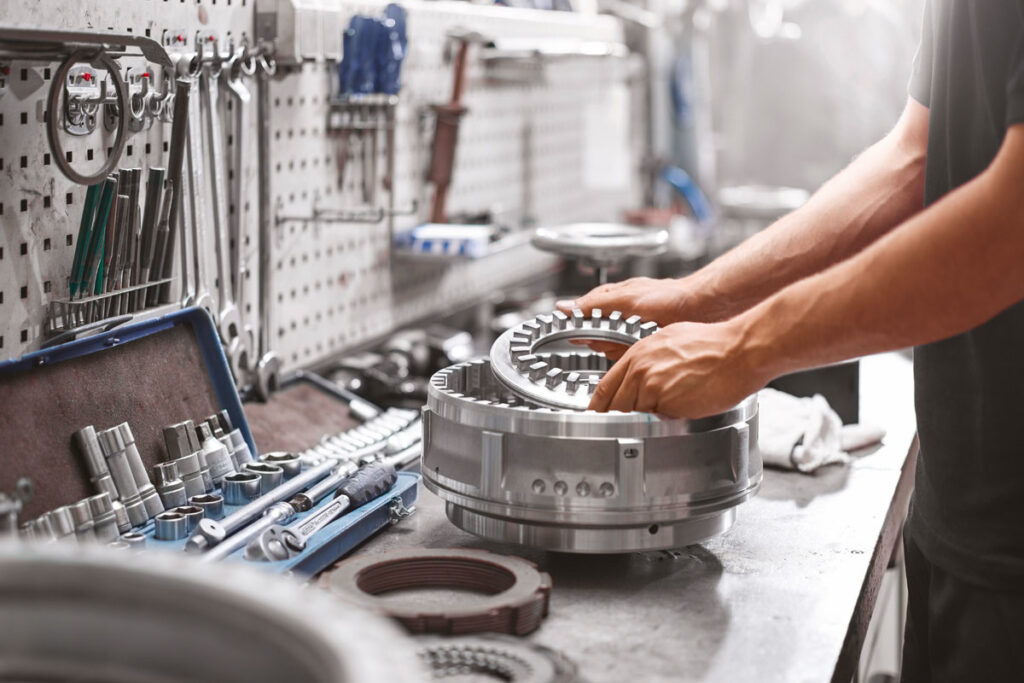
ZF’s remanufacturing portfolio now spans more than 7,000 part numbers across passenger cars, commercial vehicles, and industrial applications. In the passenger car segment, transmissions dominate, supported by components such as torque converters and electro-hydraulic steering pumps. In commercial vehicles, demand extends to clutches, air compressors, and electronic braking system (EBS) components.
But not every part is a candidate for remanufacturing. “The key factors are material value and complexity,” Galazka notes. “Many components have highly complex geometries that are expensive to produce, so recovering that value makes sense.”
Equally important is whether a part can physically be remanufactured. High-wear consumables such as brake pads, for example, are unsuitable due to their material properties. As electrification gathers pace, remanufacturing is finding new opportunities – particularly in high-value EV components. “EV adoption is growing steadily across Europe,” says Galazka. “And within those vehicles, there are very expensive components
The EV Opportunity
batteries, inverters, electric motors – that are ideal for remanufacturing.” ZF has already introduced remanufactured hybrid transmissions for passenger cars and is working with OEM customers on electric motors for buses. Development is also underway for passenger car electric drives and other EV systems. “It’s a key focus area for us,” he confirms.
Digitalisation Driving Efficiency
Over the past five years, technology has played a transformative role in remanufacturing operations. One major challenge is core collection, ensuring a steady supply of used components for processing. To address this, ZF has developed a digital platform that simplifies the process for customers, allowing them to arrange collections and track cores throughout the logistics chain.
In production, technologies such as image recognition are helping to identify components more accurately – particularly when physical identifiers are missing. Looking ahead, ZF is investing in data-driven remanufacturing. By extracting usage data from ECUs, the company aims to better understand how components have performed in real-world conditions.
“This allows us to determine which parts can be reused and which cannot,” Galazka explains. At the factory level, increased digitalisation is also improving efficiency. Metrics such as “salvageability” – the proportion of reusable material recovered from each core – are helping to optimise processes and reduce costs.
Rising Expectations in a Competitive Market
As the remanufacturing sector grows, so too do customer expectations. “Cost, quality, and availability remain the key drivers,” says Galazka. “But sustainability is becoming increasingly important as well.” ZF’s response has been to strengthen its value proposition across all four areas – offering OE-level quality at a reduced cost, improving availability through better core collection, and increasing transparency around environmental benefits.
Digitalisation underpins much of this progress, helping to streamline operations and enhance customer experience.
Looking Ahead: Opportunity and Challenge
The outlook for remanufacturing is closely tied to broader economic trend “With rising energy and raw material costs, we expect new parts to become more expensive,” Galazka predicts. “Remanufactured parts will also increase in cost, but at a lower rate – so the price gap could widen.”
That dynamic is likely to strengthen the appeal of remanufacturing. However, competition from low-cost re-engineered parts remains a concern. “They are entering the market more aggressively and can present a threat,” he acknowledges.
A Growing Role in the Aftermarket
Despite these challenges, the direction of travel is clear. As cost pressures intensify and sustainability becomes a priority, remanufacturing is moving from a niche offering to a core part of the aftermarket landscape.
For workshops and distributors alike, the message is simple: remanufactured parts are no longer just an alternative, they are increasingly a first-choice solution.