As modern vehicle systems become increasingly complex, Thinkcar is encouraging technicians to move beyond fault codes and focus on identifying the true root cause of a problem. RMS Diagnostics demonstrates how a structured approach to fault-finding can help technicians avoid unnecessary parts replacement, using the Thinkcar Euro 399 to investigate a Volkswagen Polo with a persistent wiper fault.
The vehicle presented a fault affecting the front wipers, which continued to operate intermittently despite the wiper stalk being switched off. With a number of potential causes to consider, RMS Diagnostics used the Thinkcar Euro 399 to begin investigating the issue and establish a clearer understanding of the fault.
A full system scan was carried out using the tool, identifying a fault code relating to the vehicle’s washer pump input. While this provided an initial indication of where further investigation may be required, RMS Diagnostics recognised that the fault code alone did not explain the behaviour of the wiper system or confirm the root cause of the issue.
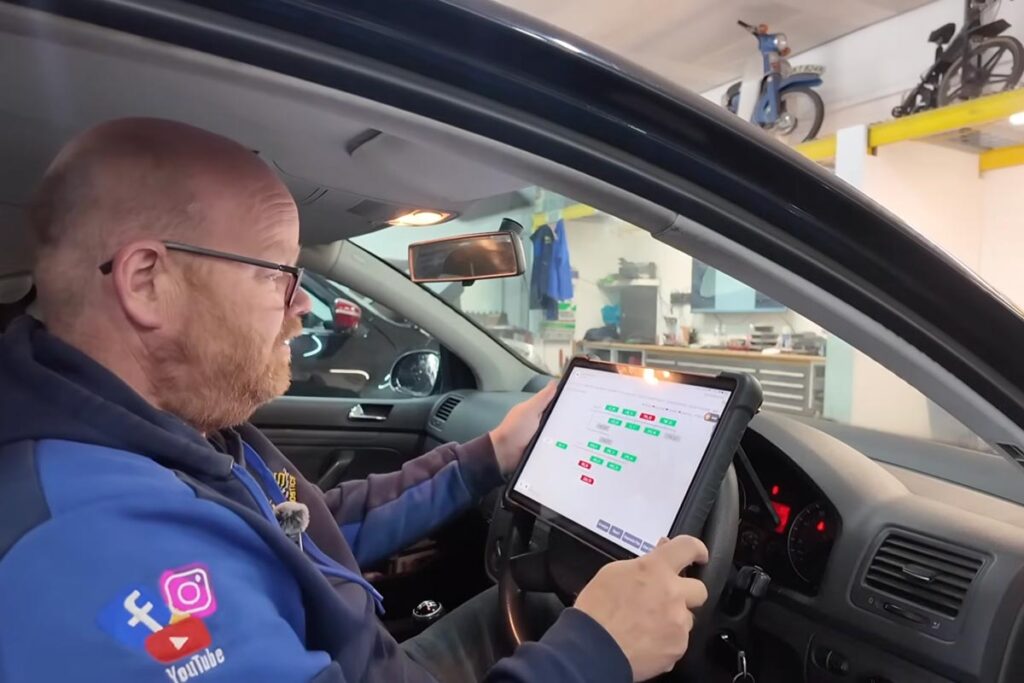
By monitoring the live data from the vehicle’s central electronics system, RMS Diagnostics was able to compare the driver’s physical input with the request being recognised by the vehicle. This revealed that, despite the wiper stalk being returned to the off position, the control module was continuing to register an intermittent wipe request.
Using the Euro 399, Bob was able to monitor these inputs in real time and use the information to narrow down where the incorrect signal was originating. The tool provided the data needed to guide the next stage of the investigation, rather than simply pointing towards a potential fault.
The findings shifted the focus of the investigation away from why the wipers were continuing to operate, towards establishing why the vehicle was receiving an incorrect input from the system.
RMS Diagnostics then removed the wiper stalk for further inspection, which showed contamination around the electrical contacts, affecting the signal being sent to the vehicle’s control module. The contacts were cleaned, and the switch reassembled before the Euro 399 was used once again to monitor the live data and confirm the repair. With the control module now correctly recognising each wiper position, the fault was resolved without the need for unnecessary component replacement.
While diagnostic tools provide technicians with valuable access to vehicle data, interpreting that information and selecting the correct next steps remains key to identifying the true cause of a fault.
Alex Gillbanks, Managing Director at Thinkcar UK, commented: “Modern diagnostics is about much more than simply reading fault codes. Technicians need access to the right information, but they also need to understand how to interpret it and use that information to guide their testing. This case is a great example of how taking a structured approach can help avoid unnecessary parts replacement and get to the root cause of a problem.”
As vehicles continue to become increasingly complex, Thinkcar is focused on supporting technicians with both the diagnostic capability and technical support needed to tackle challenging faults. Through real-world examples such as this, the Thinkcar team aims to demonstrate how combining the right tools with a logical diagnostic process can help workshops work more efficiently and with greater confidence.